

The apartment I moved into last October had a coil electric stove that a previous tenant had clearly used as extra shelf space. One burner listed to the left. The second burner took four minutes to decide it was going to heat up. The landlord's response: 'It works, just needs a little patience.' I had patience for exactly one week of that before I started doing the math on a different solution.
I looked at two-burner hot plates, a portable gas setup, even a camping stove someone in a forum swore by. The gas option disappeared fast once I read my lease. Hot plates sounded okay until I checked reviews and kept seeing the same complaint: slow, uneven heat, dial controls that have no relationship to actual temperature. What I kept circling back to was induction. Specifically the Duxtop 9100MC, 1800 watts, sensor-touch controls, about the size of a large book laid flat. I had measured the gap on my counter between the edge of the sink and the wall: 13.5 inches. The Duxtop is 11.4 inches wide. It fit. So I ordered it.
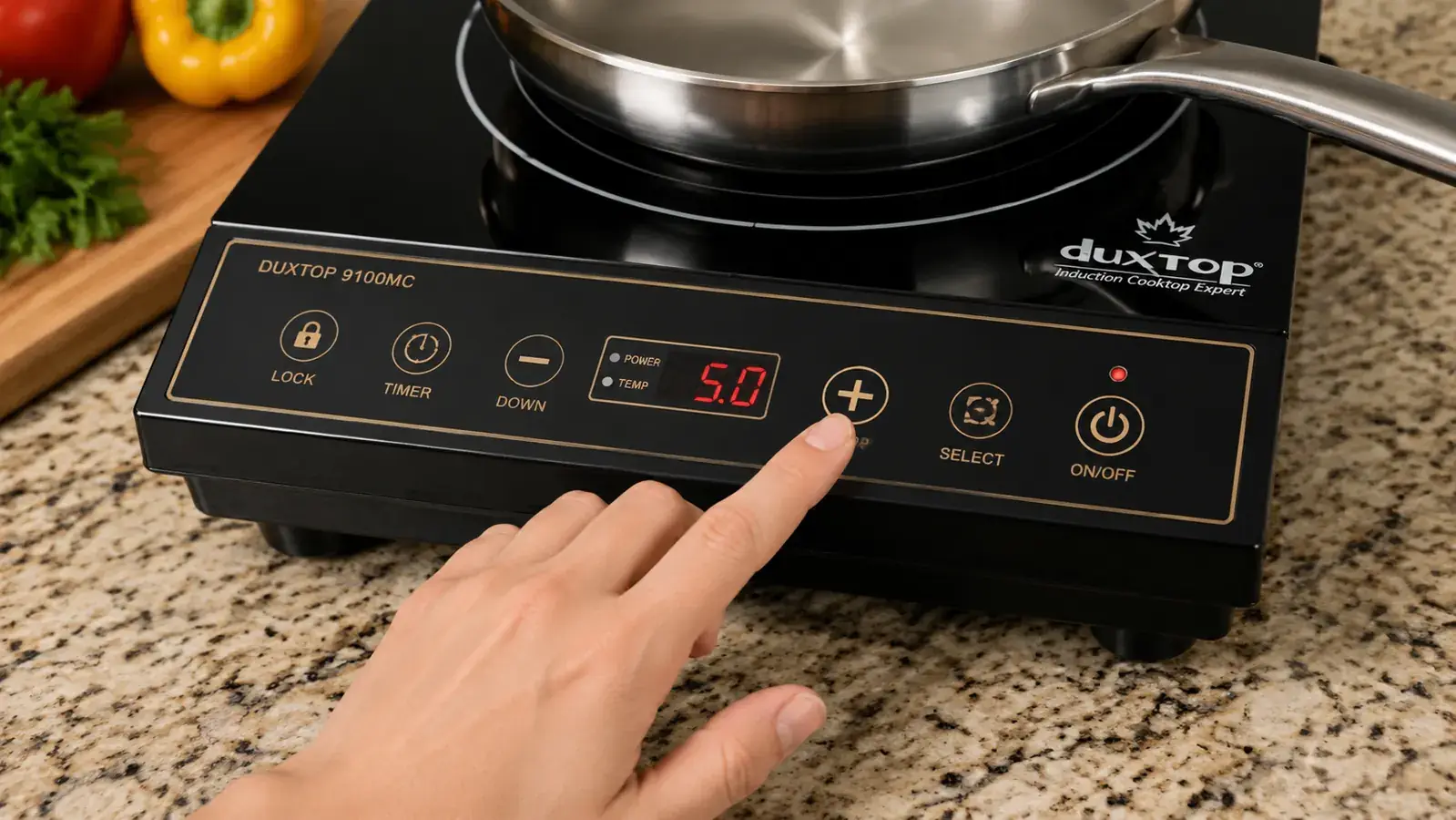
The first thing I cooked on it was a simple pan sauce for chicken thighs. I want to tell you that because it is not a glamorous first meal and that is exactly the point. I did not test it with boiling water or run some benchmark. I just needed to cook dinner on a Tuesday. I set it to power level 6, heard a faint hum, and within about 90 seconds the pan was hot enough to sear. I genuinely laughed out loud in my kitchen because that old coil would have taken eight minutes to get there and still would have hot-spotted in the middle.
The coil burner took eight minutes and hot-spotted anyway. The Duxtop was ready in 90 seconds and stayed even the whole time.
Here is what surprised me most: the cleanup. With induction, heat only transfers to the magnetic cookware itself. The surface of the cooktop stays cool, or close to it. When I spilled a little of that pan sauce onto the glass surface, I wiped it off with a damp paper towel ten minutes after I finished eating. No soaking, no scrubbing a coil that has been encrusted for three months. That alone would have sold me if nothing else did.
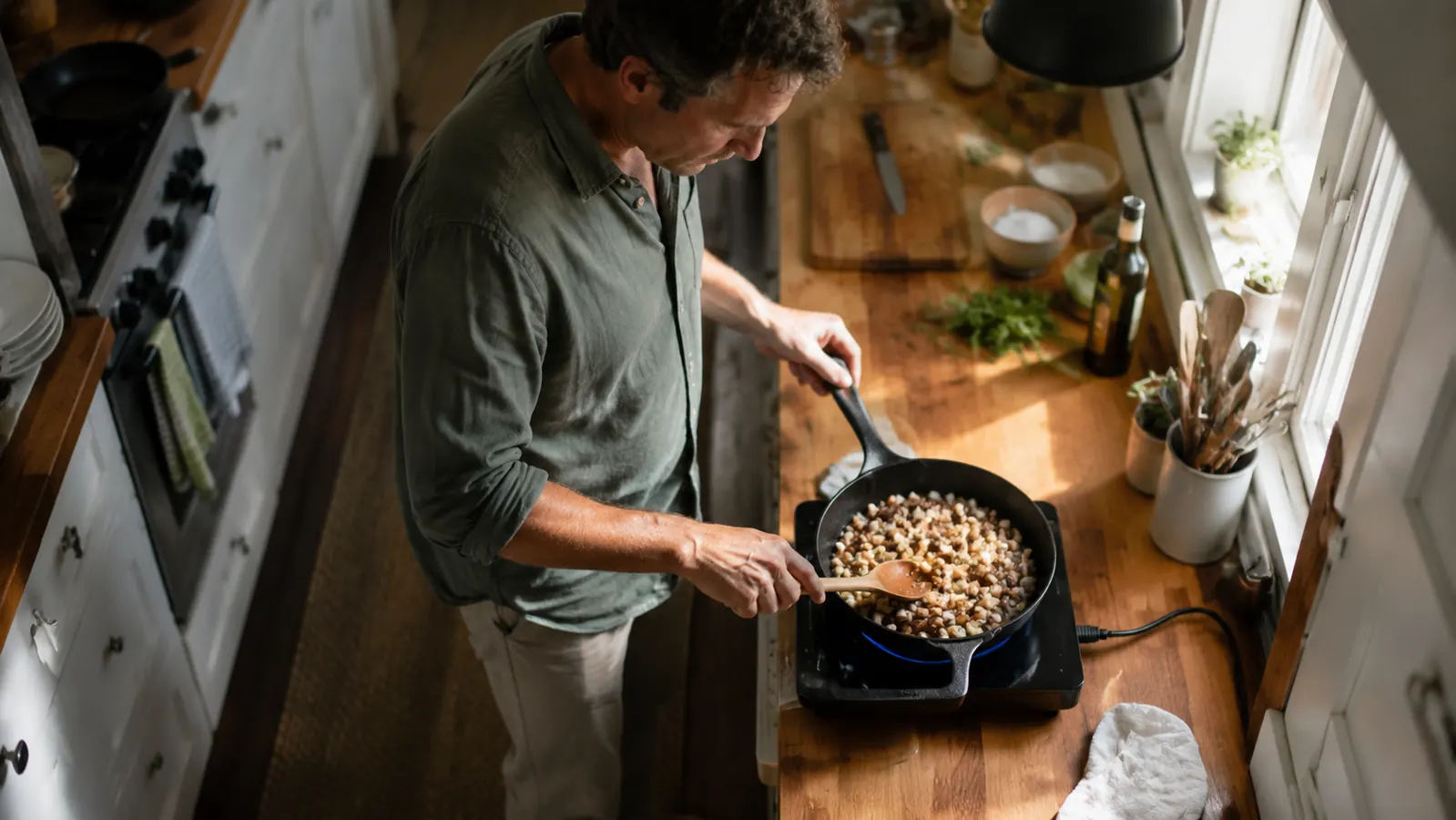
I should be clear about the one catch that nobody warned me about until I was already in it: not all cookware works. Induction needs magnetic pots and pans. My old aluminum saucepan did nothing. My cast iron skillet worked. My stainless steel pasta pot worked. My non-magnetic saute pan became a storage solution. I ended up buying one new piece, a carbon-steel wok, and between that, the cast iron, and the stainless pot, I can cook almost everything I eat in a week. If you are starting from scratch on cookware, factor that into the decision. If you already have stainless or cast iron, you are probably fine.
The appliance your apartment stove cannot compete with is sitting at its current price right now.
The Duxtop 9100MC 1800W has 10 power levels, sensor-touch controls, and a footprint small enough to tuck next to a toaster. Check today's price before it moves.
Amazon Check Today's Price on Amazon →Four months in, the Duxtop is my primary cooking surface. I use the original coil stove for exactly one thing: holding my cutting board when I need more counter space. I make pasta, stir-fries, soups, scrambled eggs, seared fish, and braised greens on it every week. The ten power levels are more granular than I expected from a portable unit. Level 3 is a genuine low simmer. Level 9 will boil a pot of water in about six minutes. Level 10 I use for searing and then step it down immediately. The controls respond the first time you touch them, which sounds like table stakes but is not on cheaper induction units.
A few things I have learned the hard way. First, the auto-shutoff is real and it will fire if you leave the unit on with no cookware for about a minute. This is a safety feature, not a flaw, but it surprised me the first time. Second, if you run it on high for extended periods in a very small space, the fan underneath will run audibly. It is not loud but it is there. I notice it in a quiet apartment. Third, the power cord is about five feet long. If your nearest outlet is across the counter, measure before you commit to a placement.

My neighbor upstairs has a full gas range and a kitchen that is probably twice the size of mine. She came over for dinner in February and asked me twice which burner I was using because she could not find the second one. When I explained that I cook everything on the one unit, she looked genuinely skeptical. Then she watched me make a weeknight red sauce from start to finish: sweat the onions low, bloom the tomato paste on medium-high, add the tomatoes and reduce on a steady simmer, finish with butter and pasta water. Total time, about 35 minutes. Nothing scorched, nothing stuck. She left with the name of the cooktop written on her phone.
What I Would Tell You If We Were Sitting at My Kitchen Table
If you are dealing with a bad apartment stove, a no-gas lease, or a kitchen so small that a second burner would mean giving up your toaster, this is the most practical single purchase you can make. It is not a workaround. It became my kitchen. The Duxtop 9100MC is not pretty. It is a flat black rectangle with a digital display. But it heats fast, controls precisely, cleans in thirty seconds, and fits in a space where nothing else would. That is exactly what you need when every square inch has to earn its place.
The one thing I would do differently: check your cookware before you order. If you have a mostly-aluminum kitchen, plan for one stainless or cast-iron piece to arrive alongside the cooktop. But if you are already cooking with magnetic pots and pans, you can be making a real dinner on this thing tonight.
Stop making peace with a burner that was never good to begin with.
The Duxtop 9100MC fits where almost nothing else does, cleans up in seconds, and cooks better than most apartment stoves you have ever used. See today's price on Amazon.
Amazon Check Today's Price on Amazon →