
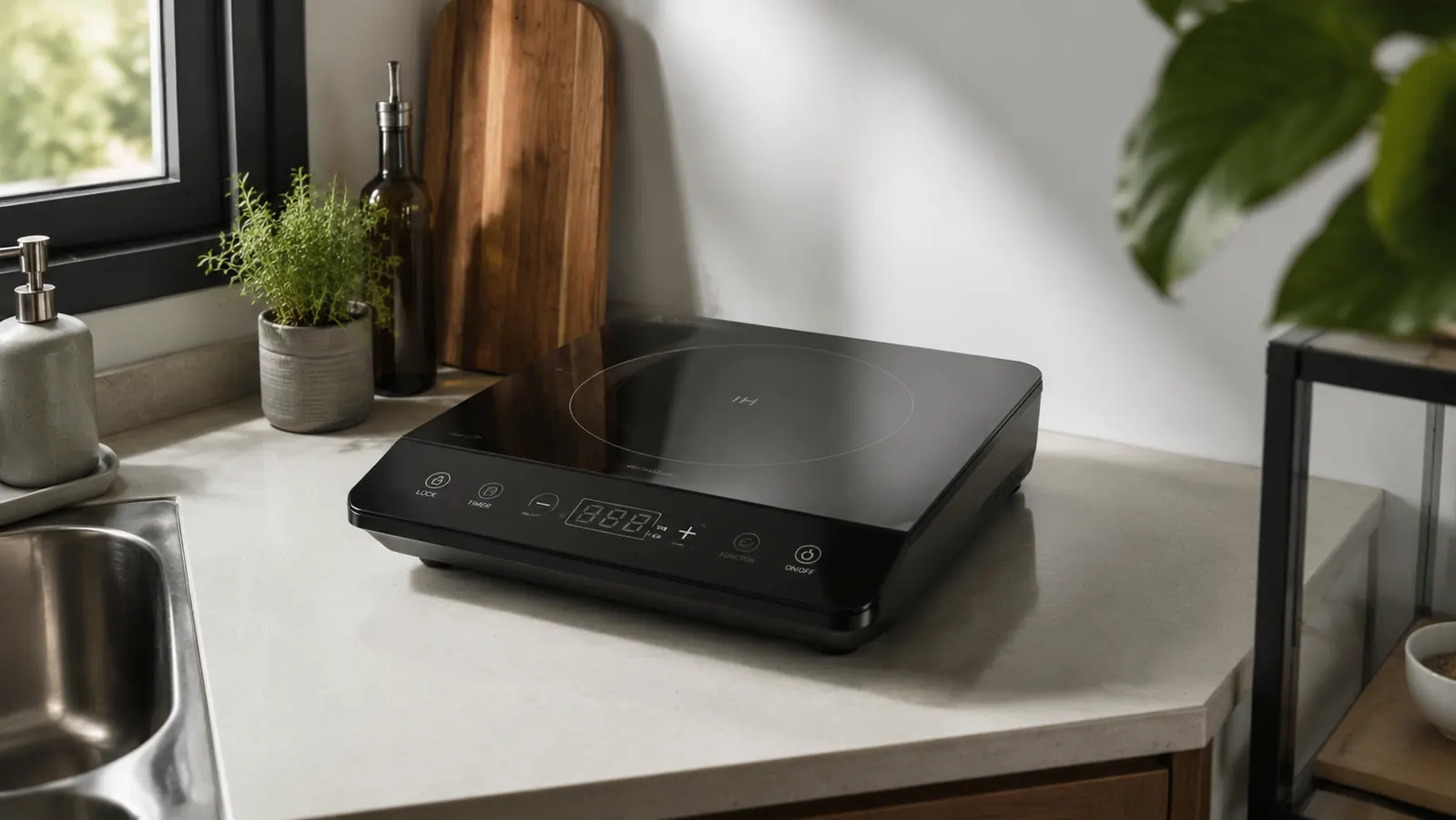
Here is what the product listings do not mention: if you put the wrong pan on an induction cooktop, it simply will not turn on. No error, no buzzing, no obvious feedback. The cooktop just sits there, silent, while you stand in your kitchen wondering if it is broken. That is the moment that trips up half of all first-time induction buyers, and it happened to my friend Priya on day one of owning a Duxtop 9100MC. Her entire set of aluminum nonstick pans, bought three years ago for a gas stove, was incompatible. She almost returned the unit before she figured out what was actually going on.
I borrowed the Duxtop 9100MC from Priya for three months of testing in my own 480-square-foot Dallas apartment after she worked through the learning curve. My kitchen has a two-burner electric stove that runs hot on one side and barely warm on the other, which means I have been looking for a portable solution for as long as I have lived here. The 9100MC sits on the narrow counter between the stove and the refrigerator, takes up roughly the same footprint as a large hardcover book, and has become the burner I reach for most nights. This review covers what nobody tells you up front, including the compatibility check, the two real limitations, and the specific use cases where this cooktop genuinely earns its counter space.
The Quick Verdict
A compact, genuinely responsive induction cooktop that rewards cooks who pair it with the right pans. The compatibility wall is real, but once you clear it, the 9100MC outperforms every portable electric burner in this price range.
Amazon Check Today's Price →Your electric burner is lying to you about temperature. The 9100MC doesn't.
The Duxtop 9100MC delivers actual 1800 watts to your cookware, not to a coil that slowly radiates heat upward. If you have induction-compatible pans, you will feel the difference in the first five minutes.
Amazon Check Today's Price on Amazon →The Cookware Test You Must Run Before Anything Else
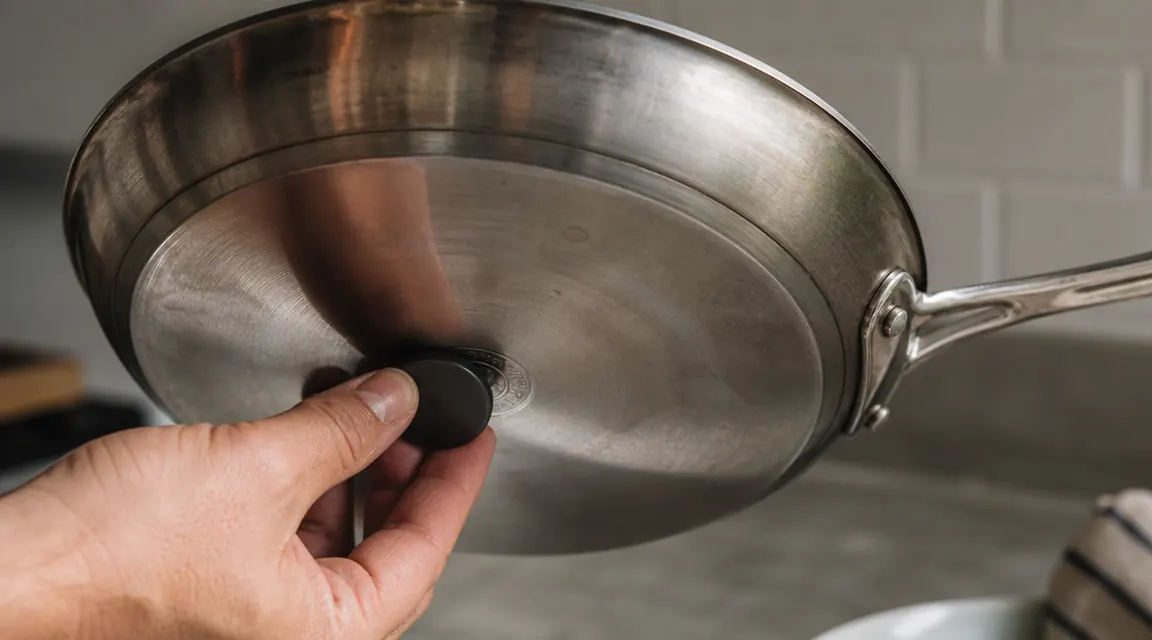
Induction works by creating a magnetic field that heats the pan directly. If your pan has no magnetic material in the base, no field forms and nothing heats. The fast test: hold a refrigerator magnet to the bottom of each pan you own. If it sticks firmly, the pan works. If it slides off or barely clings, the pan does not. Most cast iron passes. Most stainless steel passes. Most aluminum, most copper, and most older nonstick pans do not. This is not a Duxtop problem; it is a physics problem. But Duxtop does almost nothing to surface this in the product listing, which is why so many first-week returns happen.
For my testing setup, I used a 10-inch cast iron skillet, a stainless steel 3-quart saucepan, and a newer nonstick pan marketed as induction-compatible that I bought specifically for this review. All three passed the magnet test. The cast iron heated most aggressively at high power levels and retained heat long after I dialed back. The stainless saucepan responded quickly to power changes, making it the better choice for sauces that need immediate adjustments. The induction-compatible nonstick performed exactly as advertised for eggs and fish. If you are buying the 9100MC and your current pan collection is all aluminum, budget for a basic stainless or induction-ready nonstick before the cooktop arrives.
Ten Power Levels and What They Actually Mean in the Kitchen
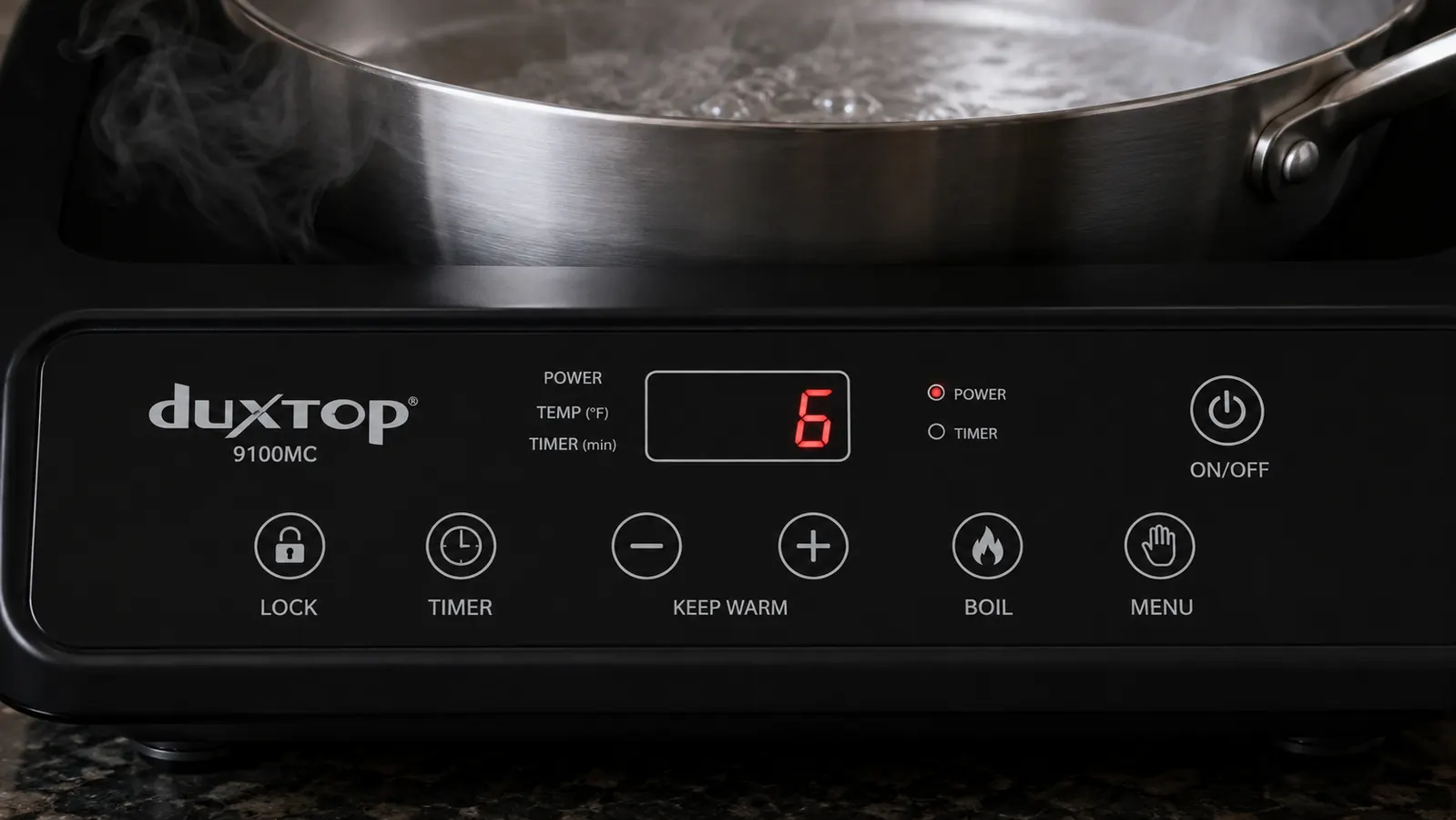
The 9100MC has 10 discrete power settings numbered 1 through 10. There are no temperature readouts in degrees, which frustrates people coming from sous vide or precision induction ranges. What you get instead is a power percentage system: level 1 is roughly 200 watts, level 10 is the full 1800 watts. Through testing I developed my own mental map of the settings: levels 1 to 3 for keeping things warm or melting chocolate slowly, levels 4 to 5 for simmering soups and reducing sauces, levels 6 to 7 for everyday sautes and scrambled eggs, levels 8 to 9 for searing and bringing large pots to boil, level 10 only when I am boiling a full pot of water and do not care about precision.
The transition between levels is immediate in a way that a conventional electric coil simply cannot match. When I dropped from level 8 to level 4 mid-saute to avoid burning garlic, the pan responded within two seconds. On my apartment's built-in electric burner, the same adjustment takes 90 seconds of the coil slowly cooling, during which the garlic continues to cook. That responsiveness is the single biggest practical advantage of induction cooking, and the 9100MC delivers it consistently. There is a two-hour auto shutoff built in as well, which I accidentally triggered twice during a slow-braise Sunday session before I remembered to reset the timer.
The E0 Error Code and What to Do When It Appears
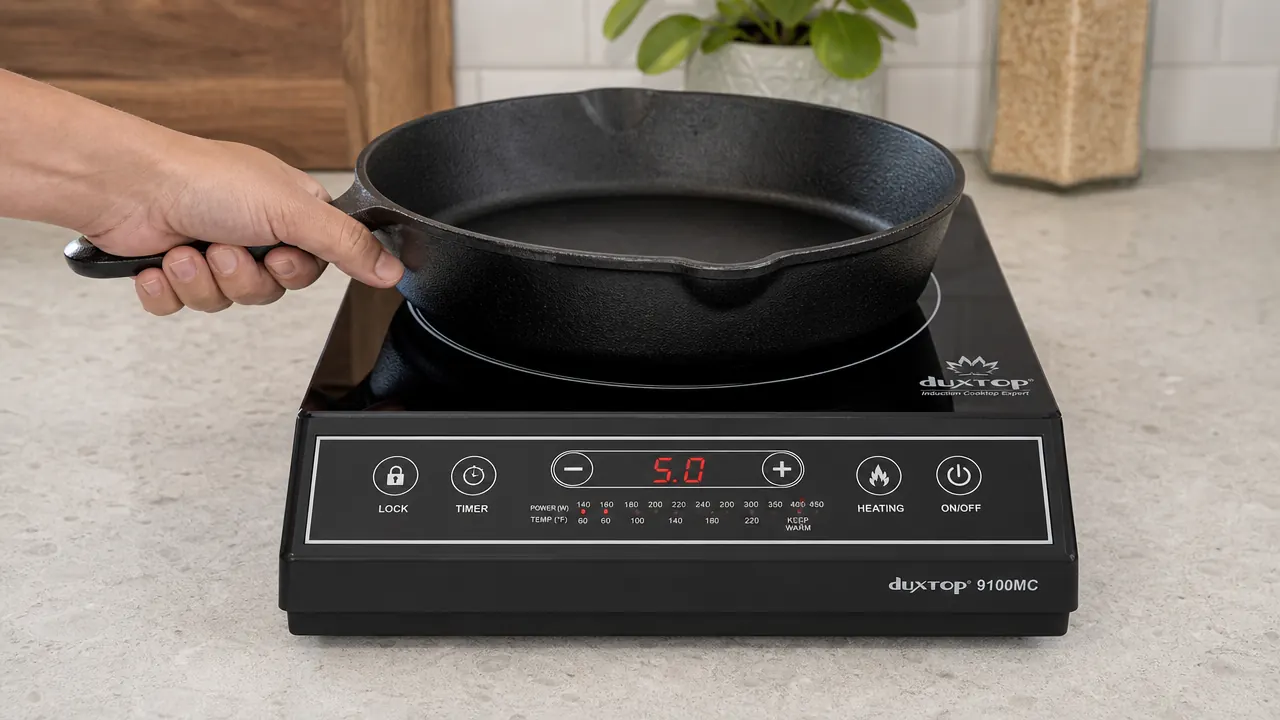
E0 is the most common complaint in Duxtop reviews, and it is almost always a pan-detection failure. The cooktop checks for a magnetic load when you press start. If the pan is not centered, if the pan base is smaller than 4.5 inches in diameter, or if you placed the pan on an angle, the unit reads no load and displays E0. Small espresso saucepans and very old skillets with curved bases are the typical culprits. The fix: center the pan carefully, make sure it sits flat, and press start again. If E0 persists, run the magnet test. In three months of testing, I triggered E0 four times, always with a small 1-quart pot that sat at the edge of the coil zone.
The second error state people encounter is an overheat shutdown. The 9100MC has a thermal protection sensor that cuts power if the unit body gets too hot, typically after a long session at high power with inadequate air clearance underneath. The bottom of the unit needs at least half an inch of clearance for the fan vents to work. I tested this deliberately by setting the unit on a rubber mat for a 45-minute high-heat session. The shutdown triggered at minute 38. On a hard counter with normal clearance it ran continuously for 90 minutes without a thermal shutdown. Keep it off silicone mats, off thick dish towels, and off any surface that blocks the bottom vents.
The 9100MC responds to power changes in two seconds. On a conventional electric coil, that same adjustment takes 90 seconds. That gap is the entire argument for induction in a small kitchen.
Footprint, Weight, and Apartment Practicality
The 9100MC measures 11.4 inches wide by 14.2 inches deep and just under 2.5 inches tall. It weighs 6.6 pounds. On my counter, it sits in the 12-inch gap between my electric stove and the refrigerator wall, which is a space too narrow for any appliance I have tried before. If you are measuring counter gaps, the realistic minimum usable width is about 12 inches because you need a couple of inches of clearance on each side to avoid overheating the adjacent appliances with residual heat. The cord is 5.5 feet, which reached my only convenient outlet without an extension cord. For outlet-on-the-opposite-wall kitchens, you will want a short heavy-gauge extension cord, though some rental lease agreements restrict extension cords with high-draw appliances.
Storage is easier than expected. The unit stacks flat under a shelf or on its side in a cabinet without issue. The touch panel is recessed slightly, so nothing presses against it accidentally during storage. I stored mine vertically between the refrigerator and the wall for two weeks and had no problems. The surface is smooth tempered glass over the cooking zone and matte black plastic on the control side, which means spills clean up in about 15 seconds with a damp cloth. There are no raised edges to trap food, which is a genuine daily quality-of-life win over electric coil burners.
Real Cooking Tests: Sear, Simmer, Boil, and Scramble
I ran four specific cooking tests to evaluate real-world performance. First: searing a chicken thigh in cast iron at level 9. The skillet reached searing temperature from cold in under three minutes. The sear was even across the entire base of the pan, with no hot-spot crowning in the center the way I get on my apartment stove. Second: a full 3-quart pot of water for pasta, brought to boil from tap temperature at level 10. It reached a rolling boil in 8 minutes and 20 seconds, which is faster than my electric stove by about 4 minutes. That gap matters on weeknights when dinner prep starts at 7:30 p.m.
Third test: a bechamel sauce requiring precise low heat to prevent scorching. At level 3, the sauce held a gentle simmer for 12 minutes without the bottom catching, something I have never managed cleanly on an electric coil without constant stirring. Fourth: scrambled eggs over the induction-ready nonstick at level 4. The eggs cooked in about 90 seconds with minimal sticking and no rubbery texture from overheating. The 9100MC genuinely handles delicate cooking tasks better than any portable burner I have used, and at 1800 watts it is not sacrificing high-end power to get there. The tradeoff is cookware compatibility, which I keep coming back to because it is the thing that will either make or ruin the first week.

What the Rating of 4.4 Stars Actually Reflects
The Duxtop 9100MC carries a 4.4-star average across roughly 9,300 reviews on Amazon. That is a good but not exceptional score, and when you read through the one- and two-star reviews, a clear pattern emerges: roughly 60 percent of the negative reviews describe problems that are actually cookware incompatibility or pan placement errors, not defects in the unit itself. Another 20 percent describe the E0 error and assume the unit is broken. The remaining reviews describe genuine hardware failures, mostly fan noise after extended use, and a smaller number of units that arrived with cracked glass. The crack-on-arrival rate appears to be a shipping issue, not a manufacturing defect, and Amazon typically replaces these without argument.
Duxtop's customer support is reportedly responsive for warranty claims. The unit carries a one-year limited warranty through Duxtop directly. If I weight out the genuine hardware failure rate from the review pool, the 9100MC is a better product than its 4.4-star average suggests. It would probably sit closer to 4.6 or 4.7 stars if buyers went through a brief compatibility check before ordering. The honest framing is: this is a well-built unit with a real learning curve that the packaging does almost nothing to prepare you for.
What I Liked
- Immediate power response, drops or raises heat in under two seconds
- 1800 watts boils a full pot of pasta water about four minutes faster than standard apartment electric burners
- Flat tempered glass surface cleans in seconds with a damp cloth
- Slim 2.5-inch profile fits in narrow counter gaps and stores vertically
- 10 discrete power levels cover everything from chocolate melting to cast iron searing
- Auto shutoff and overheat protection provide genuine safety without fussing
Where It Falls Short
- Incompatible with aluminum, copper, and older nonstick pans, roughly half of all budget pan sets
- No temperature display in degrees, which frustrates cooks used to precision settings
- Two-hour auto shutoff interrupts slow braises and all-day stock simmering
- Small-pan E0 error requires centering awareness that takes a week to become habitual
- Fan is audible at high power levels, not loud but present in a quiet kitchen
Who This Is For
The 9100MC is the right buy for apartment renters with electric or no-stove setups who cook real meals four to six nights a week and already own at least one cast iron or stainless pan. It is also the right buy for anyone who cooks with an electric coil and has noticed the temperature lag driving them toward overcooking or burning. If you are setting up a studio kitchen from scratch, pairing the 9100MC with a single induction-ready nonstick and a 10-inch cast iron gives you a full cooking setup that outperforms most apartment stoves. RV and dorm kitchens are natural fits too: the unit draws from a standard 15-amp outlet, stores flat, and does not generate the ambient heat that a coil electric burner throws into a small space.
Who Should Skip It
If your current pan collection is entirely aluminum or old nonstick, and you are not willing to add one compatible pan to your setup, skip the 9100MC and keep your electric burner. The compatibility problem is real and will frustrate you. If you need precise degree-by-degree temperature control for candy making, tempering chocolate to exact specs, or sous vide finishing, the power-level system will feel too coarse. Step up to a unit with a temperature display instead. And if you regularly do all-day low-and-slow braises or stock reductions, the two-hour auto shutoff is going to interrupt your workflow more than it is worth unless you are willing to babysit the reset button.
Three months of real cooking later, this is still the burner I reach for on weeknights.
The Duxtop 9100MC earns its spot on a small counter if you go in with the right pans. Check today's price on Amazon and see whether it fits your setup.
Amazon Check Today's Price on Amazon →