
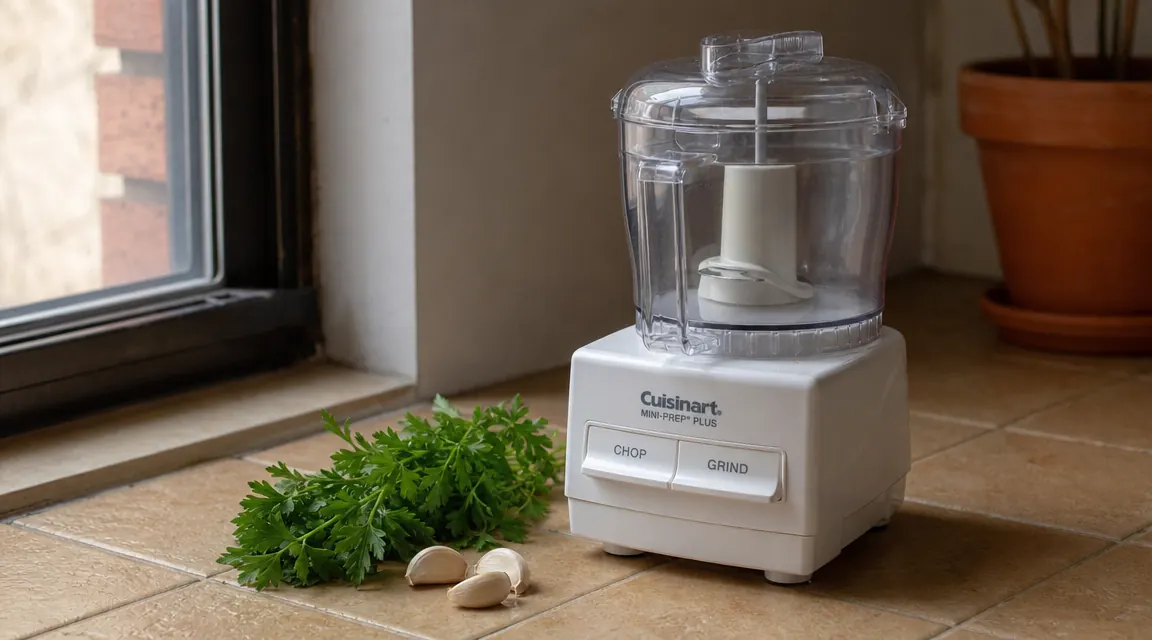
My kitchen counter is 22 inches of usable surface between the stove and the refrigerator. That is not a complaint, just the math I work with. So when I bought the Cuisinart Mini-Prep Plus 3-cup food processor last January, the decision was less about specs and more about a very specific question: could it earn those 6.5 inches of width it would occupy permanently? Six months and hundreds of meal-prep sessions later, I have a real answer. Some of it surprised me.
This is the long-term view, not a first-week impression. I have run this machine through garlic, onions, herbs, chickpeas, raw ginger, salsa, pesto, breadcrumbs, and a few experiments I will admit did not go well. I know where the blade chatter starts, I know the exact onion load that makes the lid leak, and I know what happens to the motor after 15 continuous seconds. All of that is in here.
The Quick Verdict
The Cuisinart Mini-Prep Plus earns its counter space in kitchens under 200 square feet. It chops faster than a knife for garlic, herbs, and onions, and its 6.5-inch footprint fits where a full-size processor never would. The reversible blade is legitimately clever. The 3-cup bowl fills up faster than you expect, the lid is fussy about seating correctly, and the motor needs rest breaks on tougher jobs. For a solo cook or couple doing real weeknight cooking, it is the right size at the right price.
Amazon Check Today's Price →If your counter measures its real estate in inches, this is the processor that fits
The Cuisinart Mini-Prep Plus 3-Cup Food Processor has 19,000+ reviews and a 4.6-star rating. Check today's price before you keep reading.
Amazon Check Today's Price on Amazon →How I've Used It: Six Months of Real Meal Prep
I live in a 580-square-foot apartment in a mid-rise building in Dallas. The kitchen has four appliances on the counter at any time: a two-slice toaster, a personal blender, a small drip coffee maker, and now this processor. Before the Mini-Prep Plus arrived, my garlic situation was a box grater I would drag out and wrestle with, and my onion situation was 12 minutes of crying. I cook four to five nights a week, mostly one-pot pastas, stir-fries, sheet-pan roasts, and grain bowls.
The first month I used the Mini-Prep Plus almost every single day. I was testing boundaries. Can it do frozen ginger? (Yes, in quick pulses.) Can it handle a full 3 cups of raw chickpeas for hummus? (Barely, and with multiple rest stops.) Does the garlic come out evenly minced or does it turn to paste? (Depends entirely on how long you run it, which I will explain below.) After that honeymoon period I settled into a consistent rhythm: Sunday meal prep, Wednesday herb chopping, and occasional weeknight garlic duty.
My specific use by frequency, most to least: mincing garlic (several times a week), chopping onions (once a week), making salsa (every other week), processing chickpeas for hummus (twice a month), chopping nuts for oatmeal toppings (occasionally), and making pesto from basil I grow in a window box (once a month in summer). That is a real usage spread, not a cherry-picked highlight reel.
The Reversible Blade: The Feature That Actually Matters
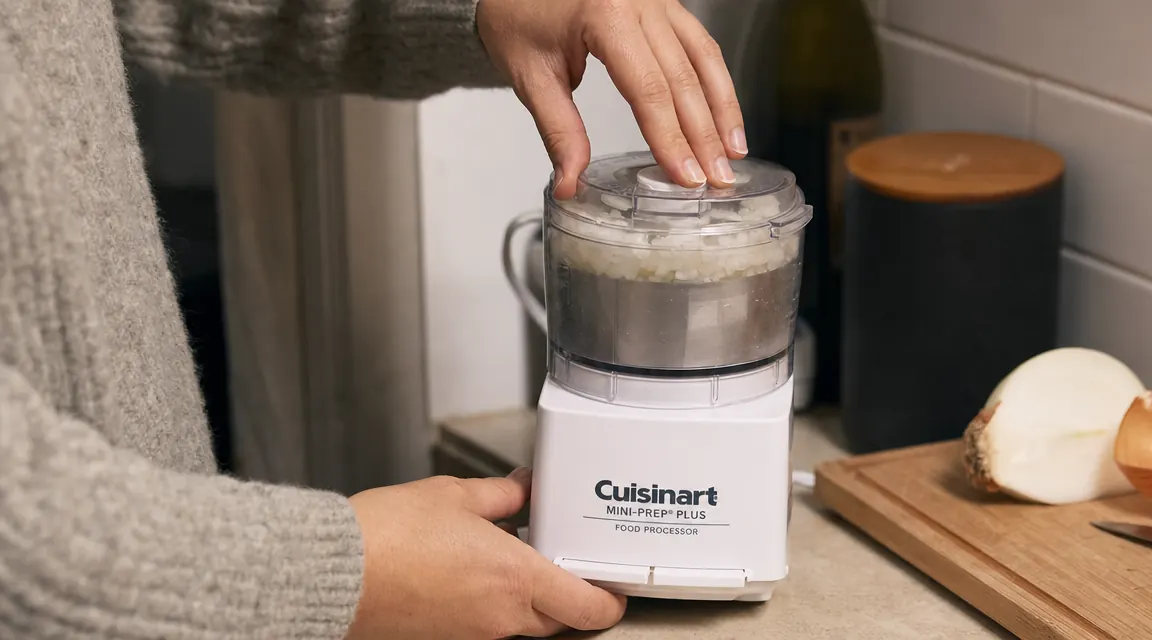
Cuisinart built a reversible stainless steel blade into this machine, and it took me about three weeks to understand why it matters. One side has a sharp edge for chopping. The other side has a blunt edge for grinding and mixing, what Cuisinart calls the puree position. You flip the blade in the bowl before snapping on the lid.
The practical difference is real. For herbs and garlic, I use the sharp side and pulse in short bursts. I get an even, coarse chop in about 6 pulses that would take me 3 minutes with a knife. For hummus, I flip to the blunt side and run it longer, which gives me a smoother puree without shredding fibers. For onions, I use the sharp side and pulse carefully. Two fast pulses too many and you cross from diced into pureed onion water, which has happened to me more than I would like to admit.
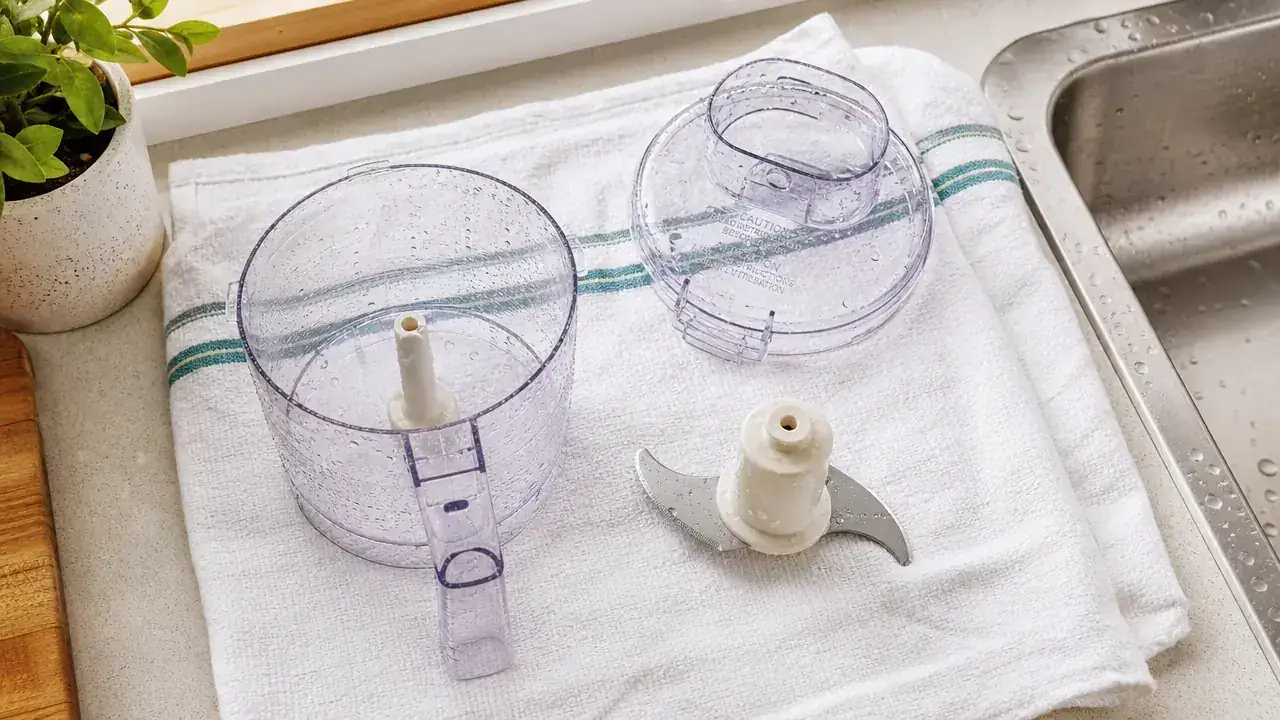
The blade pops off the center post with a pull, and the flip takes two seconds. The blade is sharp enough to demand respect when you wash it. I have a dedicated blade towel and I always wash it by hand rather than letting it float around in a sink full of soapy water. That is not a flaw in the design, it is just a knife. Treat it like one.
The reversible blade is the real selling point. Sharp side for herbs and garlic, blunt side for purees and grinding. Two seconds to flip. Once you build that muscle memory, you stop thinking about it.
Motor Performance Over Six Months
The Mini-Prep Plus runs a 21-ounce motor rated for the kind of small-batch work it is designed to do. It is not a Vitamix. It does not pretend to be. What I have noticed over six months is that the motor is consistent and has shown zero signs of degradation. It sounds the same in month six as it did in week one. The pitch does not change under light loads, and it does not struggle with the garlic and herb work it was built for.
Where the motor tells you it has limits: thick chickpea hummus. If I load the bowl to the 3-cup max and run the machine continuously for more than about 12 seconds, the motor starts to warm noticeably and the sound changes. I have learned to run it in 8-second bursts with a 5-second rest in between. It takes an extra 90 seconds total, but the hummus comes out creamy and the motor does not heat up. This is documented behavior for this class of processor, not a defect specific to my unit.
For the garlic, onions, and herbs that make up 80 percent of my use, the motor never breaks a sweat. Short pulses, immediate stops, fast results. That is where this machine is in its element, and the motor is perfectly sized for it.
The 3-Cup Bowl: Smaller Than You Think
Three cups sounds adequate until you fill it. One medium onion is already at the 2-cup mark once you quarter it and drop it in. A full bunch of cilantro is pushing the lid. Three large garlic heads worth of cloves hit the ceiling before the lid locks. The 3-cup capacity is genuinely useful for single-serve and two-person households doing small-batch prep. If you cook for four people and want to batch prep a week of soffrito, you will do two or three runs.
That is not a dealbreaker for most small-kitchen cooks, because the same people who have 22 inches of counter space are rarely cooking for eight. But it is something to be honest about. Do not buy this machine expecting to process a full cauliflower head or a 4-cup batch of anything. Plan for smaller loads and back-to-back runs if you need more volume.
The bowl itself is BPA-free plastic, which after six months of weekly use still looks clear and has no scratching or cloudiness. The measurement markings on the side have not faded. The bowl locks onto the motor base with a firm, satisfying quarter-turn, and I have had exactly zero instances of the bowl spinning off during use.
Cleaning: Where Most Mini Processors Fail or Win
The Mini-Prep Plus has three parts that touch food: the bowl, the lid, and the blade. All three are top-rack dishwasher safe according to Cuisinart, but I hand-wash the blade every time for longevity, and I have hand-washed the bowl more often than the dishwasher because it takes about 30 seconds under the faucet. The bowl has a wide enough opening that my hand fits inside with a sponge. That sounds like a small detail but it is the thing that makes a mini processor actually get cleaned rather than sitting in the dish pile.
The lid is the piece that requires the most attention. Garlic oils and herb juices work their way into the plastic gasket around the rim if you are not thorough. I run a toothbrush around the gasket every couple of weeks to clear any buildup. That is real maintenance, not theoretical. If you skip it, the lid develops a faint smell that transfers to the next batch. One cleaning session handles it completely.
The motor base wipes clean with a damp cloth. There are no crevices that trap food. The base has four suction feet that grip the counter without sliding during use. After six months, the feet still have good suction and the motor base has no discoloration or grime buildup. It looks like it did in January.
What I Liked
- 6.5-inch width fits in gaps where a full-size processor never would
- Reversible blade handles both chopping and pureeing without switching accessories
- Motor shows no degradation after six months of weekly use
- Wide bowl opening makes hand-washing fast and thorough
- Two control buttons (on and pulse) with no unnecessary settings to navigate
- Solid counter grip from four suction feet, no movement during operation
- Affordable at most price points, strong long-term value
Where It Falls Short
- 3-cup bowl fills faster than expected, requires multiple runs for larger batches
- Lid requires precise seating before the motor will engage, takes a week to get the feel
- Motor needs rest breaks on thick purees to avoid overheating
- Onions go from diced to mush quickly, requires short, careful pulses
- Blade sharpness demands careful hand-washing, not dishwasher-first approach
- No dicing disc or shredding attachments, only the reversible blade
The Lid Issue: Honest About the Learning Curve
The lid has an interlock, meaning the motor will not start if the lid is not seated correctly. In the first two weeks, I triggered this interlock probably a dozen times and thought something was wrong with my unit. Nothing was wrong. The lid locks by pressing down and rotating slightly, and until that motion becomes automatic, you will occasionally put the bowl on, press the button, get nothing, lift the lid, reseat it, and try again. After about 10 days this became muscle memory and I have not thought about it since.
The interlock is a safety feature, not a flaw. A mini processor without a lid interlock is a machine that can spray raw garlic across your backsplash if the lid pops during use. I have seen that happen with cheaper choppers. Cuisinart's interlock is firmer than most, which means a slightly steeper learning curve but a safer appliance for the long term. Worth the trade.
Counter Footprint: The Measurement That Actually Matters
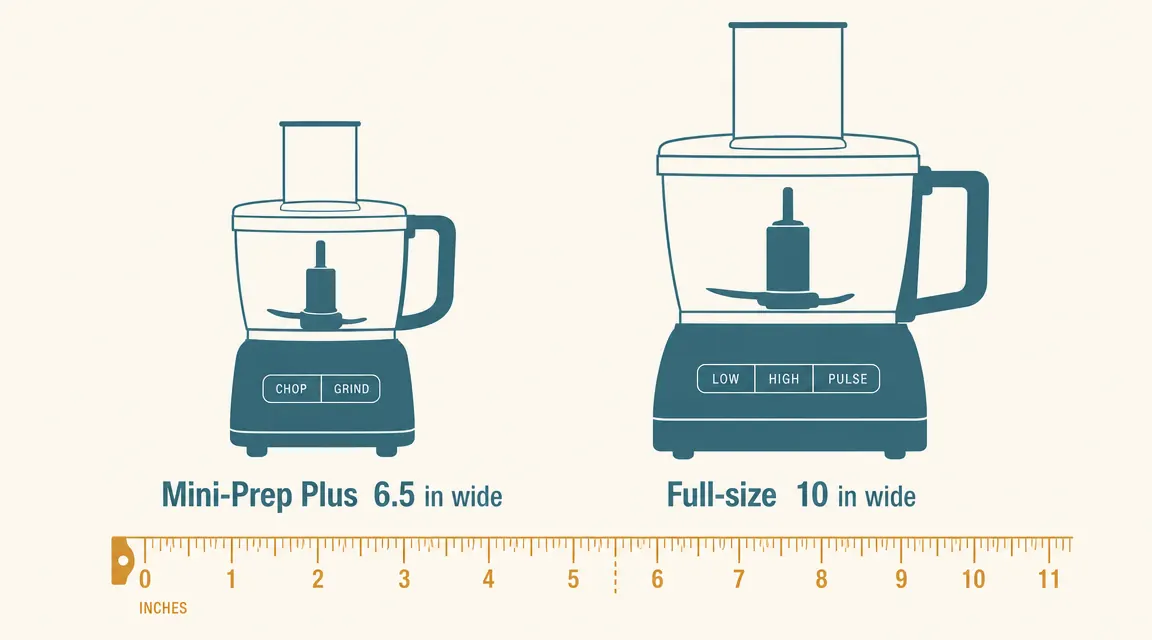
The Mini-Prep Plus measures 6.5 inches wide, 7 inches deep, and 10 inches tall with the bowl attached. It slides under my upper cabinets with two inches of clearance. It sits in the back corner of my counter and takes up less surface than a box of cereal would. For context, a standard 7-cup full-size food processor typically measures about 10 inches wide, 11 inches deep, and 16 inches tall. That is a completely different category of counter commitment.
I keep it out permanently, which is the real test of any small-kitchen appliance. If it goes in the cabinet after every use, it effectively stops getting used. The Mini-Prep Plus is small enough that storing it on the counter does not feel like a sacrifice. It costs me a 6.5-inch column of counter width that it earns back in saved prep time every single week.
Who This Is For
The Cuisinart Mini-Prep Plus is the right machine if you cook for one or two people in an apartment kitchen, you do real weeknight cooking (not just reheating), and your primary prep tasks are garlic, herbs, onions, and small-batch sauces or spreads. It is also the right machine if you have looked at full-size food processors and correctly concluded that you do not have the counter space or the batch volume to justify them. At this price point and this footprint, it is difficult to find a competitor that matches the build quality. The Hamilton Beach 3-cup chopper is cheaper but noticeably louder and uses a single-edge blade that does not handle purees as cleanly. See the full breakdown in the Cuisinart Mini-Prep Plus vs Hamilton Beach comparison and the list of what a machine like this unlocks in 10 reasons a mini food processor belongs in every small kitchen.
Who Should Skip It
Skip the Mini-Prep Plus if you regularly cook for four or more people and want to batch prep a week's worth of anything in a single run. The 3-cup bowl will frustrate you. Skip it if you want to shred cheese, slice vegetables, or use disc attachments. This machine does one thing, the reversible blade, and does it very well. If you need a full accessory ecosystem, a 9-cup or 11-cup processor is the right tool. Also skip it if you are looking for a blender to do smoothies or soups. The blade and bowl design are for chopping and pureeing solids, not liquids.
Six months in, it still earns its 6.5 inches every single week
The Cuisinart Mini-Prep Plus 3-Cup Food Processor is a genuine small-kitchen workhorse at a price that does not require much deliberation. Check today's price on Amazon.
Amazon Check Today's Price on Amazon →