
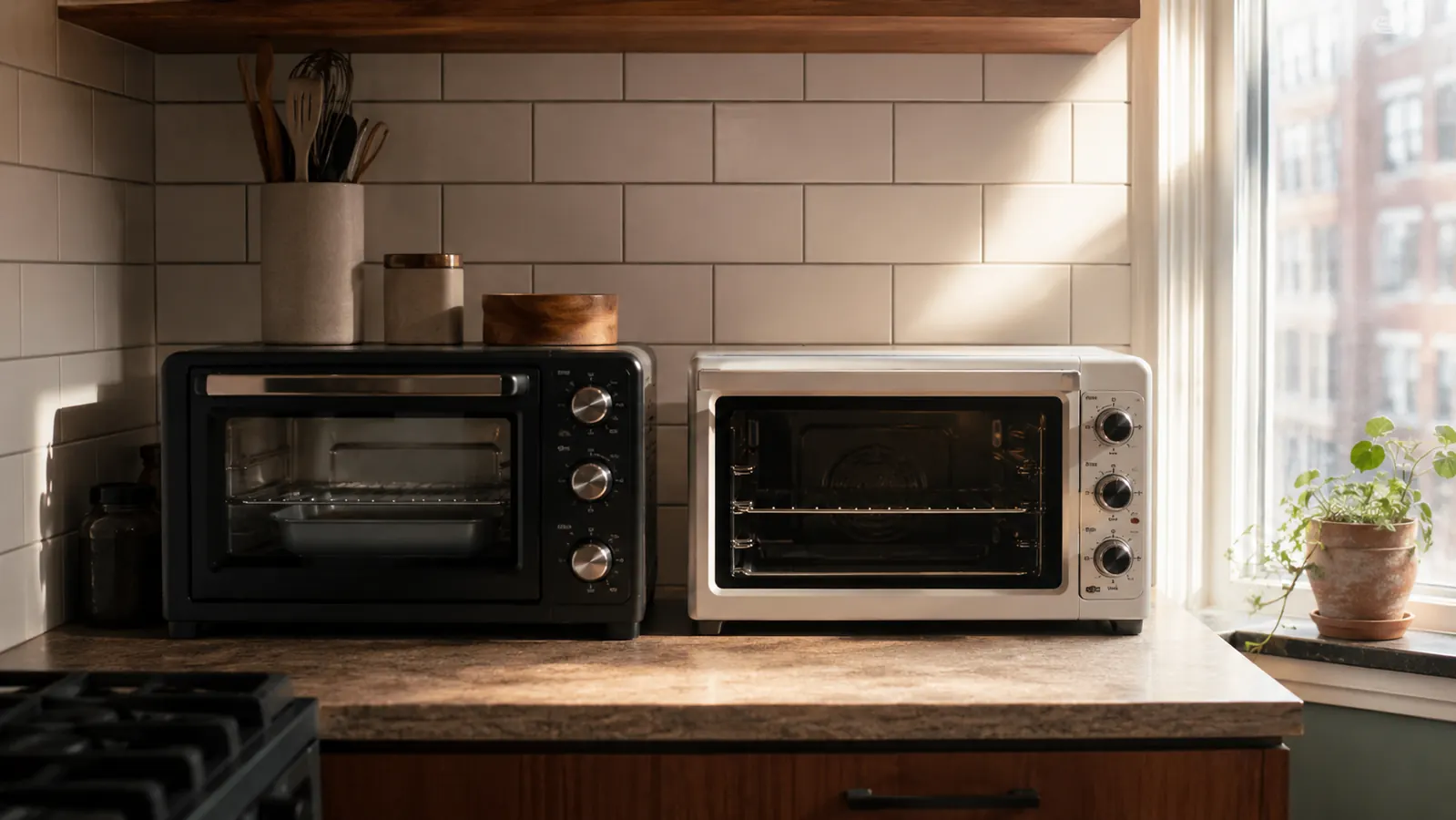
Most people shopping for a compact toaster oven end up bouncing between these two: the Breville BOV450XL Mini Smart Oven at the higher end and the Panasonic FlashXpress NB-G110P at the lower end. Both have devoted fans, both show up on every short list, and both fit on a counter where a full-size oven never could. The short answer is that the Breville is the better oven for anyone who wants to cook real food, not just toast bread. The FlashXpress is faster to preheat and costs less, but its cooking range is genuinely limited. If you are debating between the two, here is what actually separates them.
I tested the Breville BOV450XL in a 420-square-foot apartment with 22 inches of counter clearance between the microwave and the cabinet edge. That is the kind of constraint this oven was designed for. Over about fourteen months I used it for toast, reheated leftovers, roasted vegetables, baked fish, made frozen pizza, and slow-cooked a small chicken. I borrowed a FlashXpress from a neighbor for a side-by-side week. What follows is what I actually found.
| Breville BOV450XL | Panasonic FlashXpress | |
|---|---|---|
| Price (current) | Mid-range pricing | Check today's price on Amazon |
| Interior volume | 0.45 cu ft | 0.58 cu ft |
| Footprint (W x D) | 16.5 in x 14.5 in | 12.8 in x 12.0 in |
| Cooking modes | Toast, Bake, Broil, Reheat (4) | Toast, Bake, Broil (3) |
| Preheat to 400F | ~5 min | ~2.5 min (infrared) |
| Toast consistency | Even edge-to-edge | Center-biased, edges lighter |
| Convection | No (IQ element technology) | No |
| Max temp | 450F | 500F |
| Element type | Quartz/nichrome IQ element | Double infrared |
| Brand rating | 4.5 stars, 9,113 reviews | 4.6 stars, ~7,500 reviews |
| Long-term cooking versatility | High | Moderate |
Where the Breville BOV450XL Wins
The Breville's core advantage is its IQ element technology, which adjusts power to the quartz and nichrome heating elements in real time based on how quickly the oven cavity heats up. In practice, this means it does not just blast heat and hope for the best. It modulates. The result is noticeably more even cooking across the rack, and it is especially obvious on toast. Slice for slice, the BOV450XL produces consistent browning from crust to crust. The FlashXpress browns faster in the center but leaves the outer edges of longer slices visibly lighter. That is a geometry problem caused by where the infrared elements sit, and no setting adjustment fully corrects it.
The BOV450XL also has a dedicated Reheat function, which the FlashXpress does not. This matters more than it sounds. Reheating leftovers in a toaster oven is one of the most common use cases in a small apartment, and doing it with a Bake preset at 350F tends to dry things out. The Breville's Reheat mode runs at a lower, gentler wattage cycle that warms food through without sacrificing texture. I used it more than any other function. Also worth noting: the four dedicated presets are selected by a single dial, not a menu system. For a countertop appliance you use every morning, that tactile simplicity is not trivial.
Where the Panasonic FlashXpress Wins
The FlashXpress reaches cooking temperature faster than almost any compact oven at this price. Its double-infrared element system hits 400F in roughly two and a half minutes, compared to about five minutes for the Breville. If your primary use case is weekday toast and reheating a slice of pizza before you leave for work, that speed difference is real and daily. The FlashXpress also has a slightly smaller footprint, at around 12.8 inches wide versus the Breville's 16.5 inches, so if your counter situation is particularly tight it may be the only option that physically fits.
The FlashXpress is also considerably cheaper at current prices. For a kitchen where the oven is strictly for toast and occasional reheating, spending more on the Breville is harder to justify. The FlashXpress handles those two jobs competently, and if that is the full scope of what you need, it earns its price. The interior cavity is also slightly larger by volume, which means it can fit a standard 9-inch pizza where the Breville is genuinely tight with anything larger than 8 inches.
If you cook more than toast, the Breville earns its price quickly.
The BOV450XL Mini Smart Oven has 4.5 stars across more than 9,100 reviews and handles real cooking in a 16.5-inch footprint. Check the current price on Amazon before you decide.
Amazon Check Today's Price on Amazon →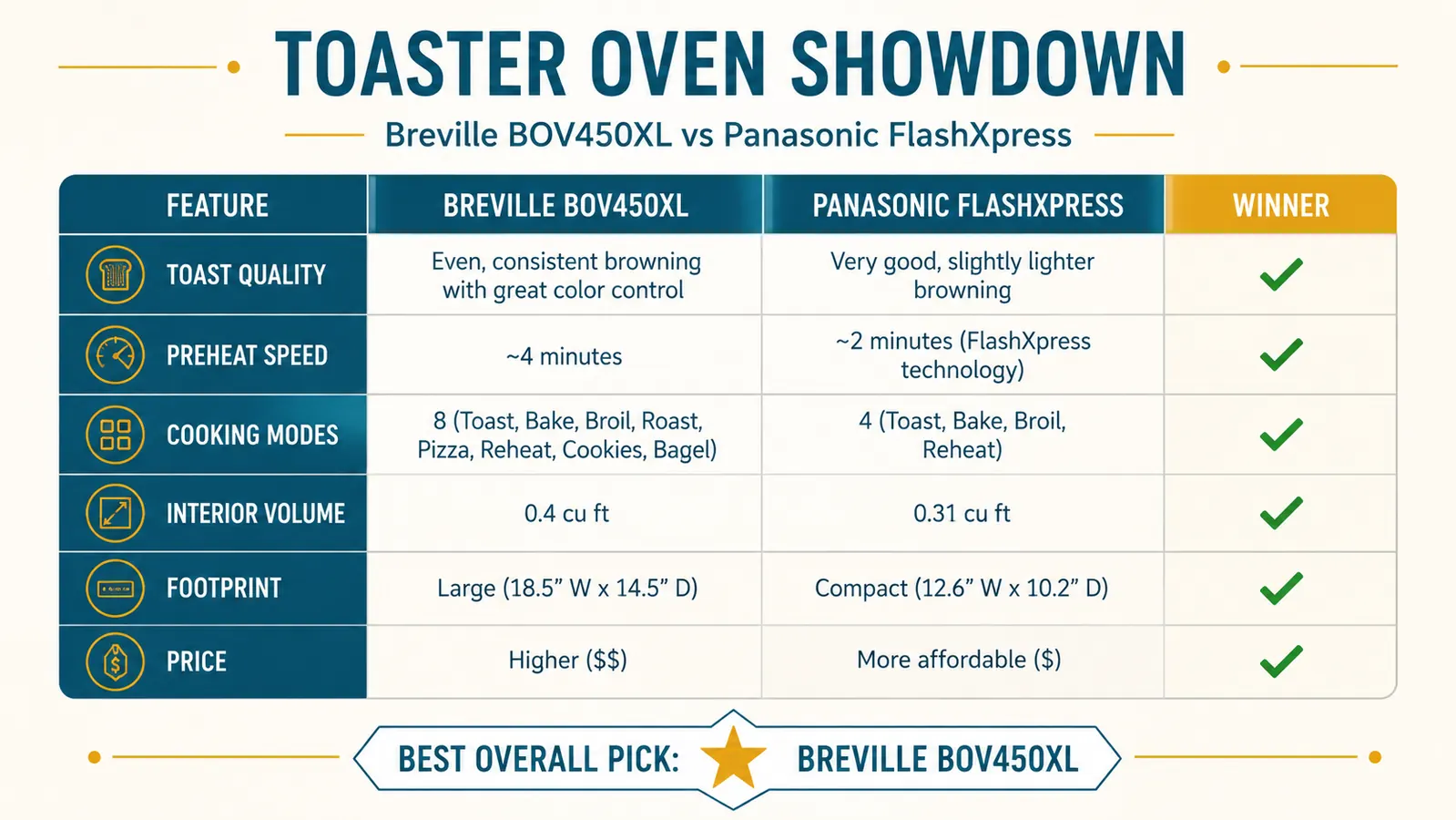
Toast Test: The Detail That Changes the Decision
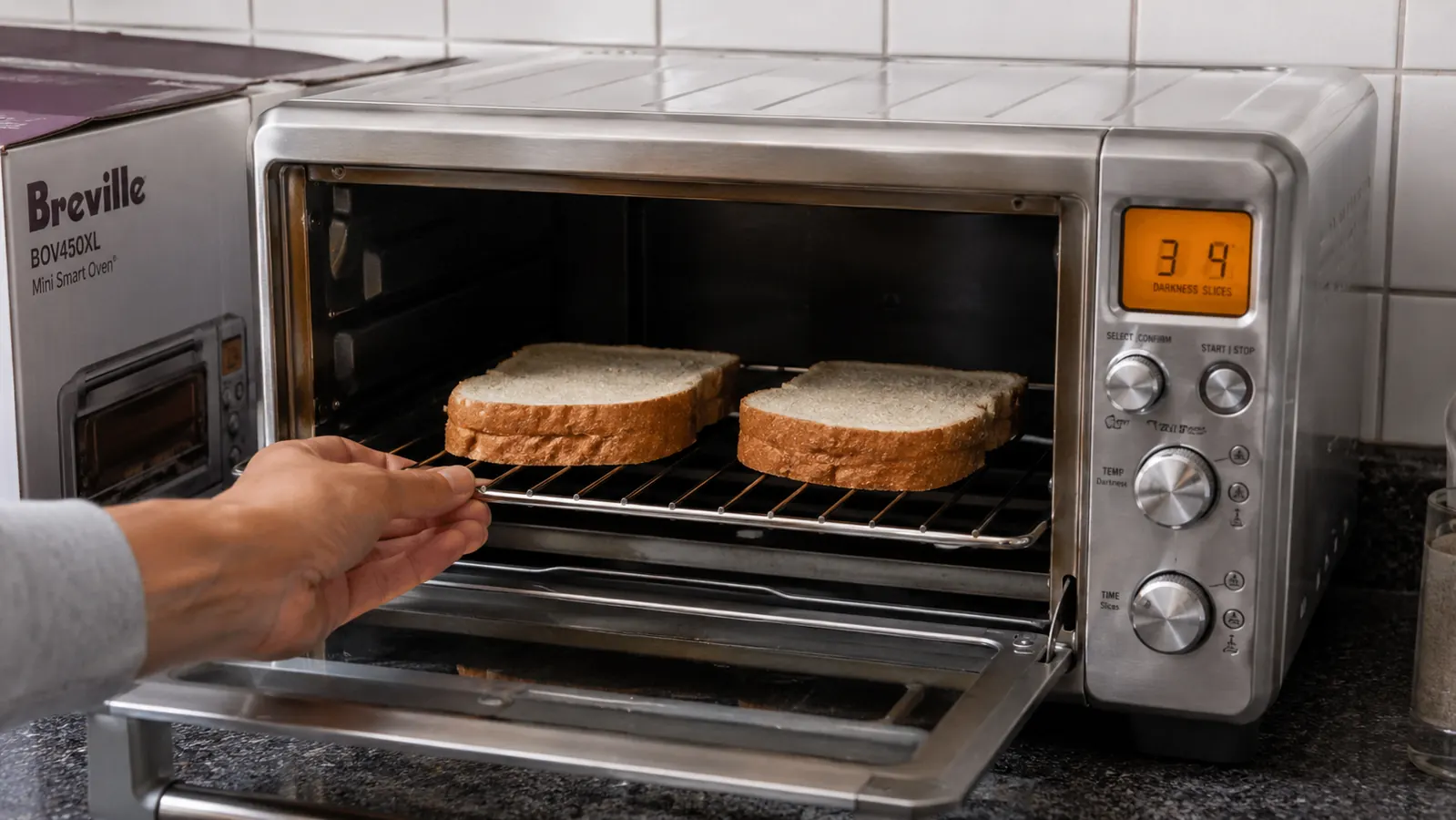
I ran the same bread through both ovens on the same setting: medium darkness, single-rack, two slices of standard sandwich bread side by side. The Breville consistently produced even browning across the full slice on every setting from light to dark. The FlashXpress produced a slightly darker result in the center quarter of each slice and a noticeably lighter band near the edges, particularly with longer sandwich slices. For smaller bread like English muffins or thick-cut bagel halves that sit closer to the center element, the FlashXpress was actually excellent. The issue is mostly geometric and shows up with wider slices.
The Breville's toast selector dial uses a numeric 1-to-5 darkness scale that is intuitive and repeatable. The FlashXpress uses a minute/second dial that requires you to mentally convert "how dark do I want this" into cooking time, which is less intuitive and varies by bread type. After a week of daily use I still found myself second-guessing the FlashXpress time dial in a way I never did with the Breville.
The FlashXpress preheats faster. The Breville cooks more consistently. Those two facts explain almost everything about how to choose between them.
Baking and Roasting: Where the Gap Widens
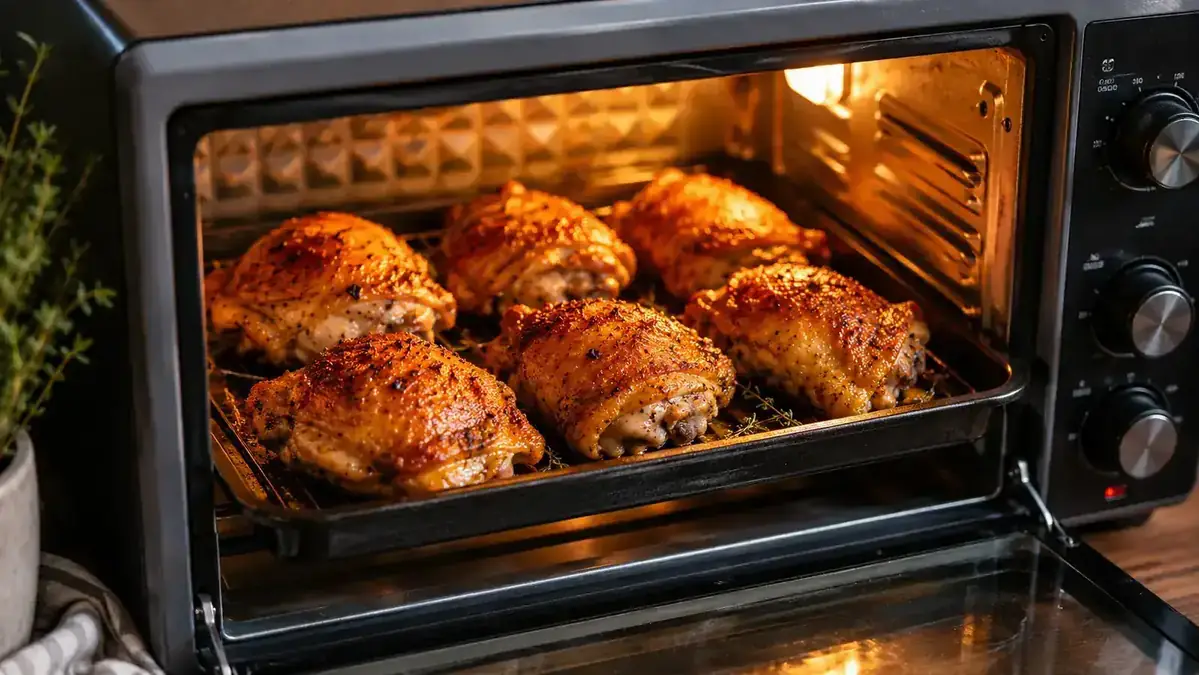
This is where the Breville separates itself clearly. I have baked salmon fillets, roasted broccoli, made a frozen pepperoni pizza, and slow-cooked a whole 2.5-pound chicken in the BOV450XL. Every one of those tasks required genuine temperature control over 20 to 45 minutes. The Breville's IQ element system kept the internal temperature stable throughout, and the rack positioning (the BOV450XL has three rack positions) gave me enough flexibility to manage different food heights without burning the top of anything.
The FlashXpress is capable of baking and broiling, but its infrared-only heating system tends to cook surfaces faster than interiors, which is excellent for toast and for crisping the surface of leftovers but creates a challenge for anything that needs time to cook through. A thick chicken thigh came out with a beautifully browned exterior and a slightly underdone interior on my first test. It is correctable with experimentation, but it is a real limitation compared to the Breville's more forgiving, modulated heat.
Footprint and Counter Reality
The Breville BOV450XL measures 16.5 inches wide, 14.5 inches deep, and 10.8 inches tall. The FlashXpress is 12.8 inches wide, 12.0 inches deep, and 10.4 inches tall. In a kitchen where the gap between the microwave and the refrigerator is 13 inches, the Breville simply does not fit and the FlashXpress might, depending on clearance. Measure before you order. The Breville needs at least 4 inches of clearance on all sides from walls and cabinets for heat venting, and so does the FlashXpress. Neither oven can be pushed flush against a wall.
The Breville's door drops down, which means you need about 16 to 18 inches of clearance in front of the oven to open it fully and pull a rack out safely. The FlashXpress door also drops down and requires similar clearance. Neither design is better here, but it is worth measuring the depth of available counter space, not just the width, before committing to either.
Who Should Buy Which
Buy the Breville BOV450XL if you cook actual meals 4 or more nights a week, if your oven is going to handle anything beyond toast and reheating, or if you want one appliance that works as a real oven substitute in a small kitchen. Its even heating, modulated element system, and four cooking modes justify the price premium over a full cooking lifetime. At 4.5 stars across more than 9,100 reviews it has earned its reputation through real kitchens, not marketing copy.
Buy the Panasonic FlashXpress if your real use case is fast morning toast, you have under 13 inches of counter width to work with, or budget is a firm constraint and you will not be asking the oven to do more than toast and light reheating. It is a focused tool that does two or three things well and takes less space to do them. Do not buy it expecting versatility it was not designed for.
If you are on the fence and your kitchen can fit the Breville physically, spend the extra money. You will use the additional capability, and you will not regret the even toast. Most people who start with the FlashXpress to save money end up wanting more from their countertop oven within a year. The Breville is the oven you stop thinking about replacing.
Stop replacing appliances every two years. The Breville is the last small oven most people need.
4.5 stars, 9,113 reviews, brushed stainless steel, and a 0.45 cubic foot interior that handles real cooking. See the current price and availability on Amazon.
Amazon Check Today's Price on Amazon →